The Hoop and the White Buffalo
A Tale of Twins Sequel Vol 7
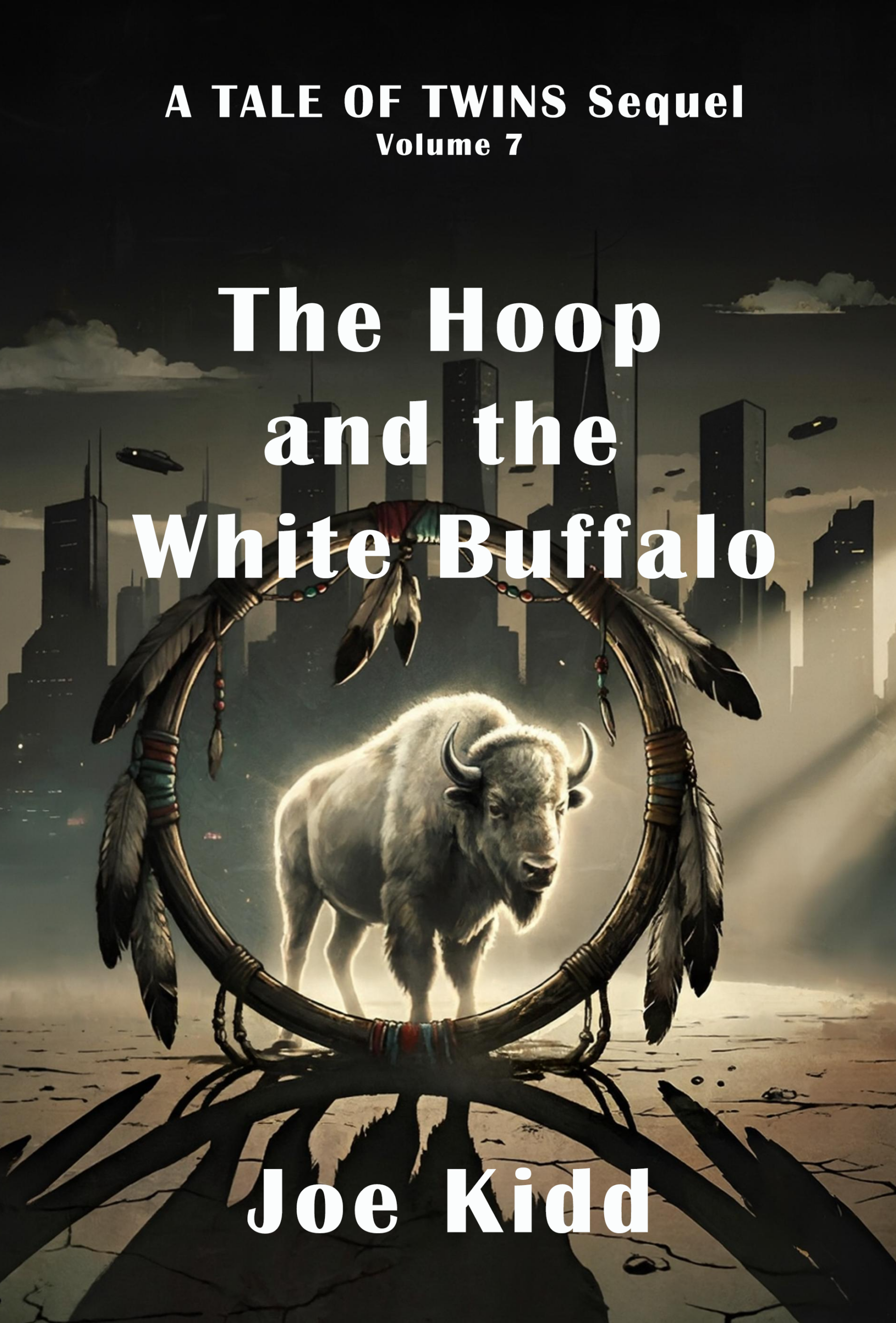
As Amity’s founding generation prepares to relinquish power, a new generation must decide whether the community’s promises can reshape a nation without becoming another empire. In the seventh volume of Joe Kidd’s Tale of Twins, brothers Thomas and William inherit complementary responsibilities: one guards the covenant that built Amity; the other carries its principles into American government. Between them stands a question that generations of twins have struggled to answer: can power become an instrument of repair rather than possession?
Their differences become urgent when devastating attacks destroy the nation’s coastal centers, displace millions, and contaminate lands and waters across borders. William assumes the presidency amid institutional collapse. Thomas leads Piyawiconi, whose wealth, infrastructure, medical coordination, and logistics now support national survival. The brothers need each other, but cooperation threatens the independence Amity was built to protect.
William proposes the Greater Circle, a resilient national capital north of Amity, founded on shared governance with Indigenous nations. Thomas insists that assistance cannot become subordination. Piyawiconi’s conditions protect the Cavern’s Living Patient status, preserve the Guardians Council’s authority, and require relief for affected tribal communities before capital negotiations proceed. Emergency need must not become another excuse to suspend obligations or seize what others have safeguarded.
While lawyers negotiate, elders gather across nations and borders to ask what rebuilding should mean. Their council begins with grief, not triumph. Contaminated rivers, endangered communities, divided homelands, and remembered dispossession demand more than symbolic recognition. Delegates insist that waters be named, sovereignty carry practical authority, and those who tend the land shape decisions before distant institutions define its future.
Tommy’s relationship with the Cavern expands into recognition of connected formations beyond Kansas. What governments regard as strategic anomalies may belong to a living network sustained through relationships older than the republic. The emerging continental framework must therefore acknowledge not simply human interests, but obligations to the earth itself.
These ambitions meet their practical test through Marisol, whose journey from vulnerable worker to community advocate brings her onto the Greater Circle construction site. She recognizes undocumented workers afraid to seek help and discovers how easily Sacred Care can become ceremonial language when nobody notices suffering. Her work measures national renewal through ordinary encounters: a name remembered, an injury acknowledged, a door someone feels safe enough to enter.
For Hana and TJ, rebuilding also requires genuine departure from authority. Their children cannot inherit responsibility while the founders continue quietly controlling its terms.
As a continental accord takes shape, Raymond helps Tommy understand the family’s recurring twins as complementary forces carrying the work of mending across generations. The White Buffalo Woman’s presence becomes not a distant promise awaiting spectacle, but an enduring relationship the surface world is learning to recognize again.
A year later, the Greater Circle lives, grows, and remains imperfect. The concluding vision rejects final victory. The hoop is mending because people continue choosing attention, accountability, and shared obligation. Its restoration is neither a completed prophecy nor one family’s achievement. It is the unfinished work of learning, together, how to remain relatives.
For readers who enjoy hopeful speculative fiction, Indigenous futurism, socially conscious political drama, family-centered epics, and stories of rebuilding after catastrophe, The Tale of Twins offers a vision of survival rooted in responsibility rather than control.
It asks what happens when a nation stops searching for one person strong enough to save it—and begins building enough trust that no one has to stand alone.
Mitákuye Oyás’iŋ — we are all related.
Available at the Joe Kidd Store on Bookspace, Shopify and Spotify

My name is Joe Bellis, and I create content under the alias Joe Kidd so that my personal, political, and religious opinions are at arm’s length from business and professional endeavors. Welcome to my little corner of the web.
As, a self-identifying autodidact with over 60 years of varied experience, including
-
- Arbitration and Conflict Resolution
- Author
- Business and Process Analytics
- Digital and Social Media
- E-book Creation in 100’s of Areas of Interest
- Fiction and Non-Fiction Author
- Graphic Design, Marketing, and Printing
- Politics and Political Commentary
- Small / Medium Business Consulting .